Manufacturing Driven by Our Customer Commitment
Putting customers first is at the core of how we manufacture. It influences where we source components, the equipment we invest in, how we test our products, and the inventory we keep on hand.
That commitment extends beyond manufacturing with warranties, repair services, exchange programs, and technical support designed to keep our customers up and running.
Why Customers Choose TCS
Manufactured in the USA from castings through final assembly.
ISO 9001:2015-certified with quality built into every stage.
Ongoing investment in R&D, engineering, and product improvement.
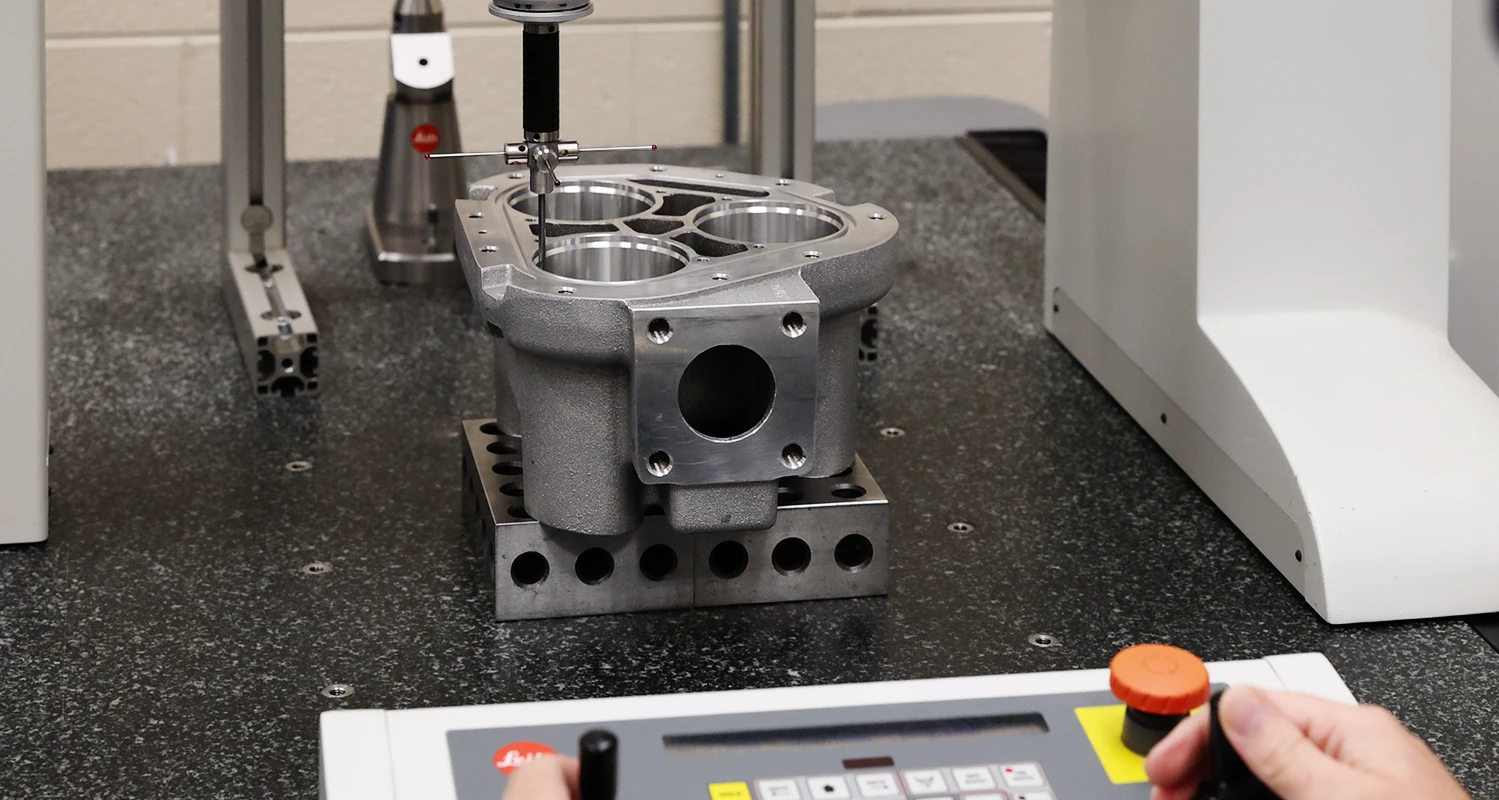
Two in-house machine shops built around tight tolerances.
Customer needs help drive our products, processes, and support.
Built to stock for faster turnaround and shorter lead times.
What We Manufacture
TCS builds products you can count on.
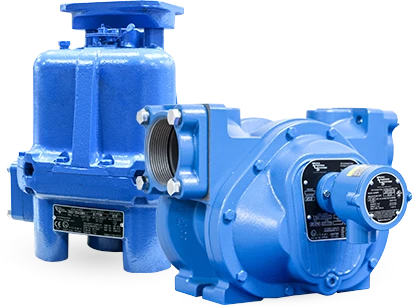
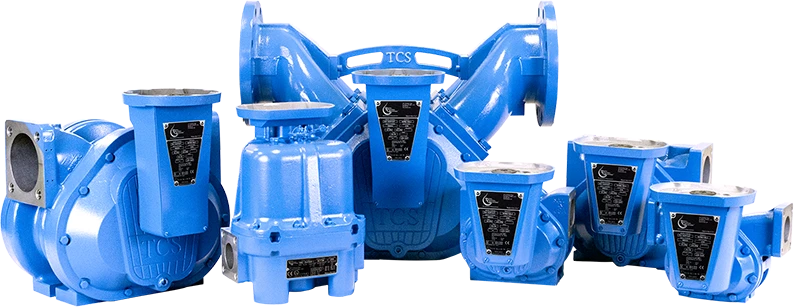
All our positive displacement flow meters, electronic registers, and accessories are manufactured right here at our Fort Wayne facility. We also develop software solutions that integrate with our equipment to help customers get more from their TCS systems.
Inside the TCS Manufacturing Process
Quality Assurance is built into every step of our manufacturing process. Check out each stage our products go through at our Fort Wayne facility.
Filter by: All Meters Accessories TCS 3000
As an ISO 9001:2015 Registered company, TCS builds quality into every stage of the process—from product design and engineering through manufacturing and production.
Tight tolerances, routine master meter checks, and barcode-based traceability help ensure consistency, compliance, and quality throughout manufacturing.
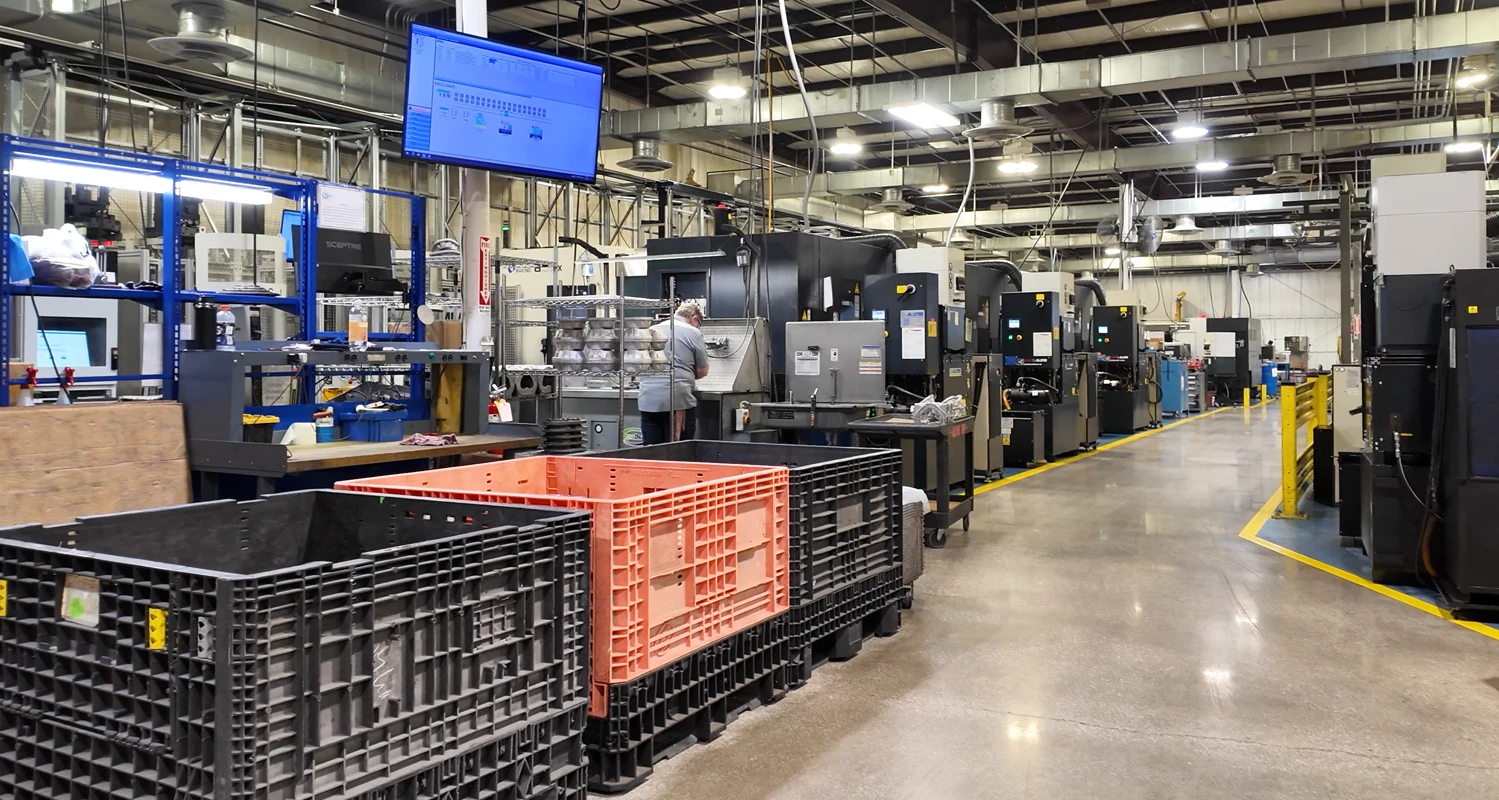
Two in-house machine shops give TCS greater control over production, with two staffed shifts and an automated third shift supporting 24/7 manufacturing capacity.
Keeping machining in-house helps us manage quality, scheduling, and customer demand, while Fort Wayne’s strong precision-machining base provides additional capacity when needed.
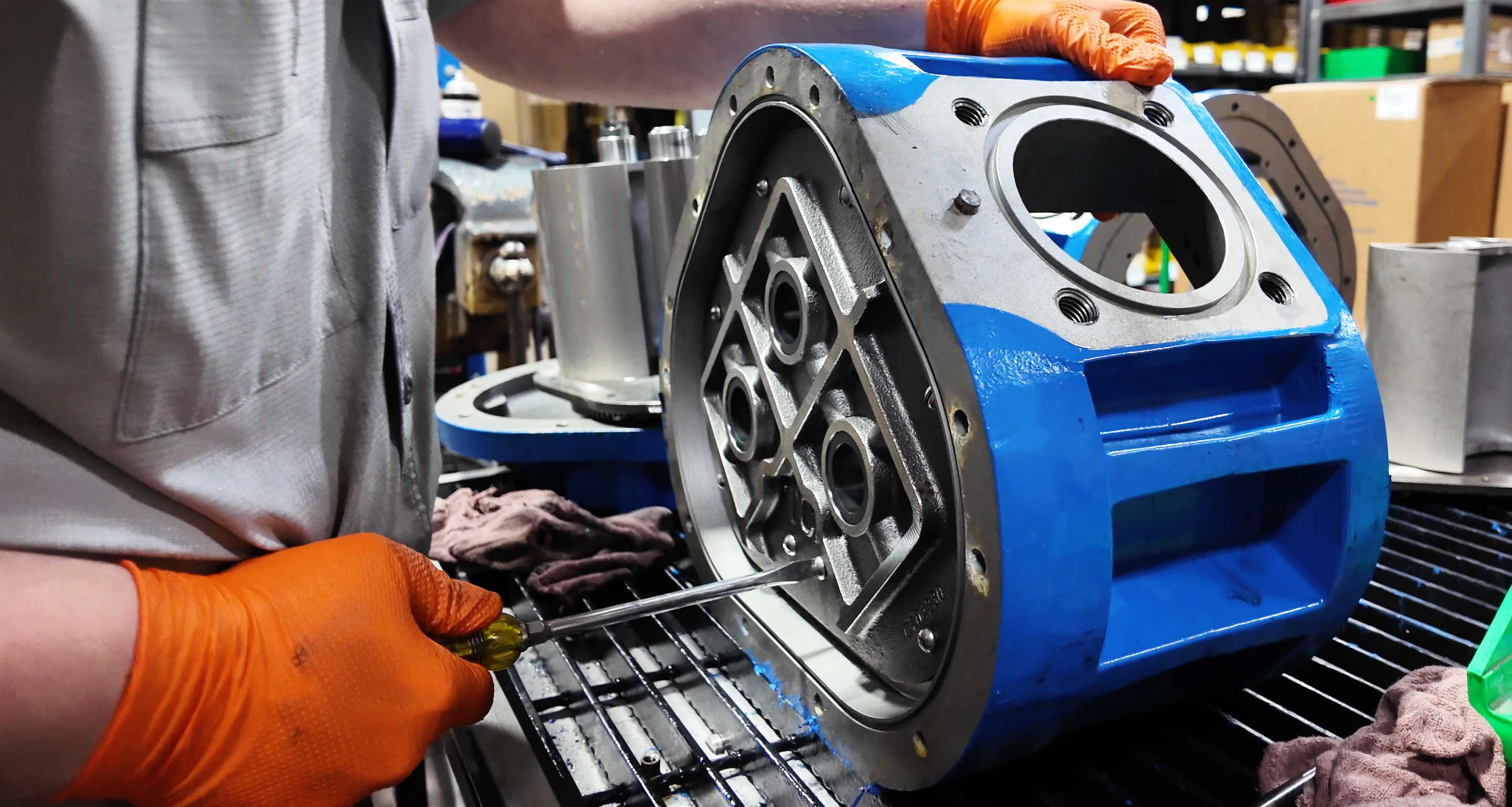
Before assembly, each TCS-machined meter housing and cover is vacuum tested to verify that it is free from defects.
This process helps identify small holes and casting defects that other inspection methods, including hydrostatic and X-ray testing, can sometimes miss.
Meter assembly takes place at our Fort Wayne headquarters, with dedicated build stations organized by meter size and metallurgy.
Once assembled, each meter is checked by a second assembler to verify that it was built to specification and meets TCS construction standards.
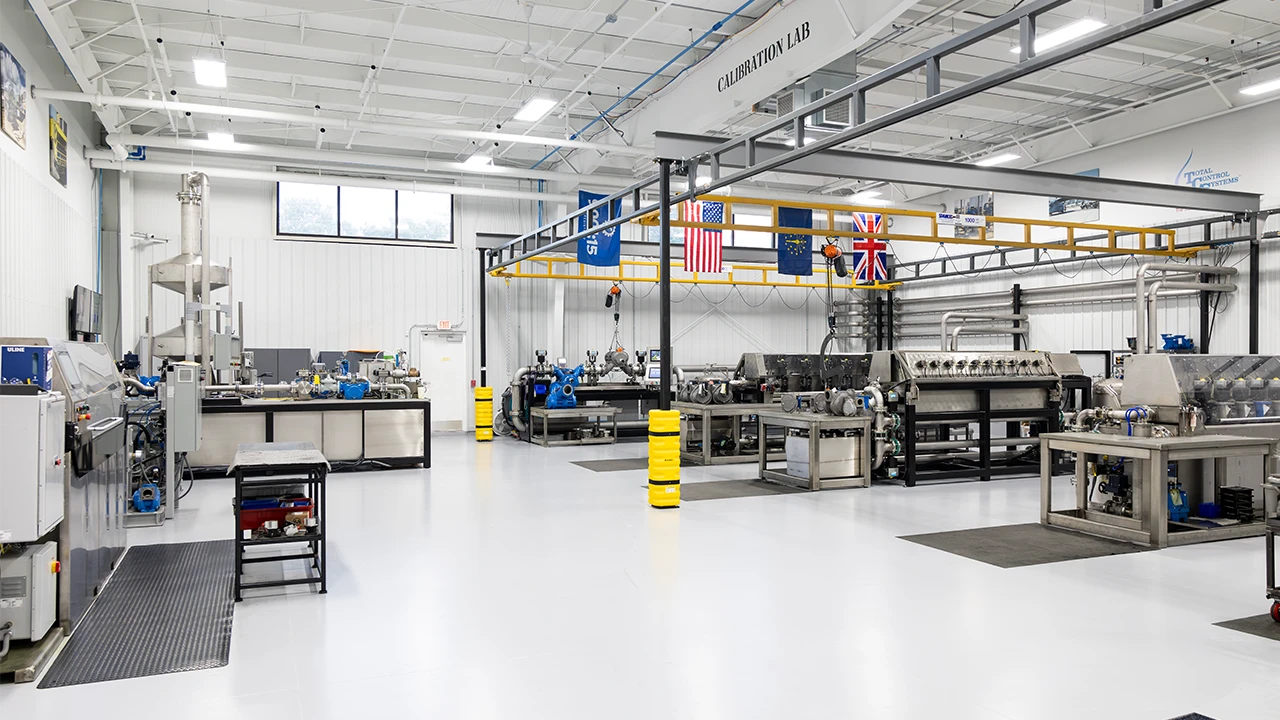
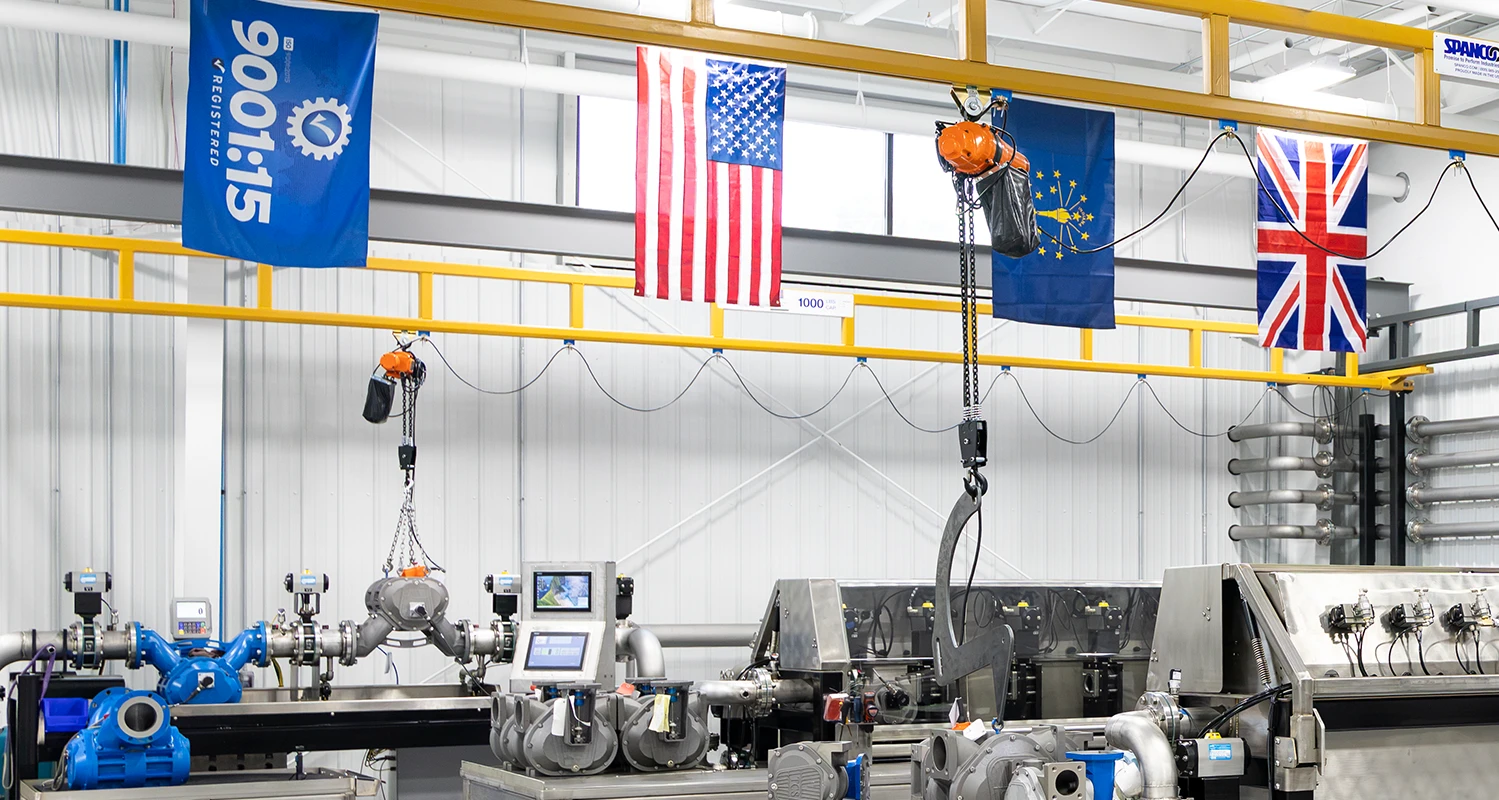
Every TCS meter is calibrated in our in-house calibration lab, engineered and built through collaboration between TCS, MEI, ICS, and VMS.
The lab includes a Brodie compact piston prover and eight calibration lines capable of testing multiple meters while verifying performance to various international standards.
DEF purity requirements call for a separate calibration process to help prevent fluid cross contamination.
For that reason, TCS maintains a dedicated DEF calibration line that uses deionized water rather than the standard calibration fluid used for other meters.
Beyond standard testing and calibration, TCS LP meters undergo hydrostatic pressure testing to verify that meter assemblies can withstand required pressures.
Accessories are tested individually and again as part of the complete assembly to help confirm performance throughout the system.
TCS accessories are assembled in-house at our Fort Wayne headquarters, including linkage kits, control valves, air eliminators, strainers, DMPs, and more.
Each accessory is built to defined standards, tested, and prepared for coating, with components tagged and barcoded for traceability and quality control.
Every TCS component undergoes at least one test before leaving our facility.
Depending on its construction and application, an accessory may go through multiple testing procedures designed to verify proper operation and performance.
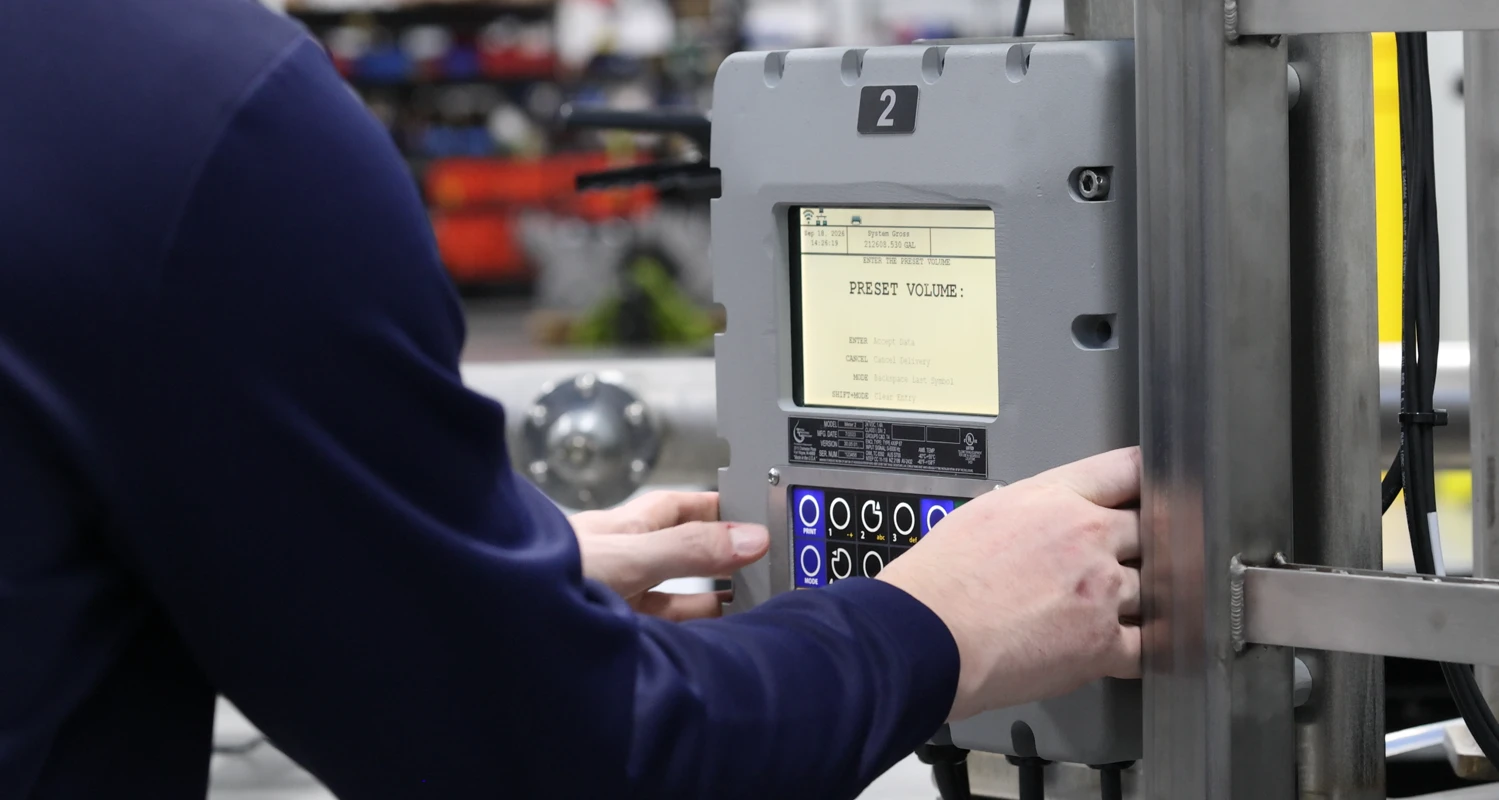
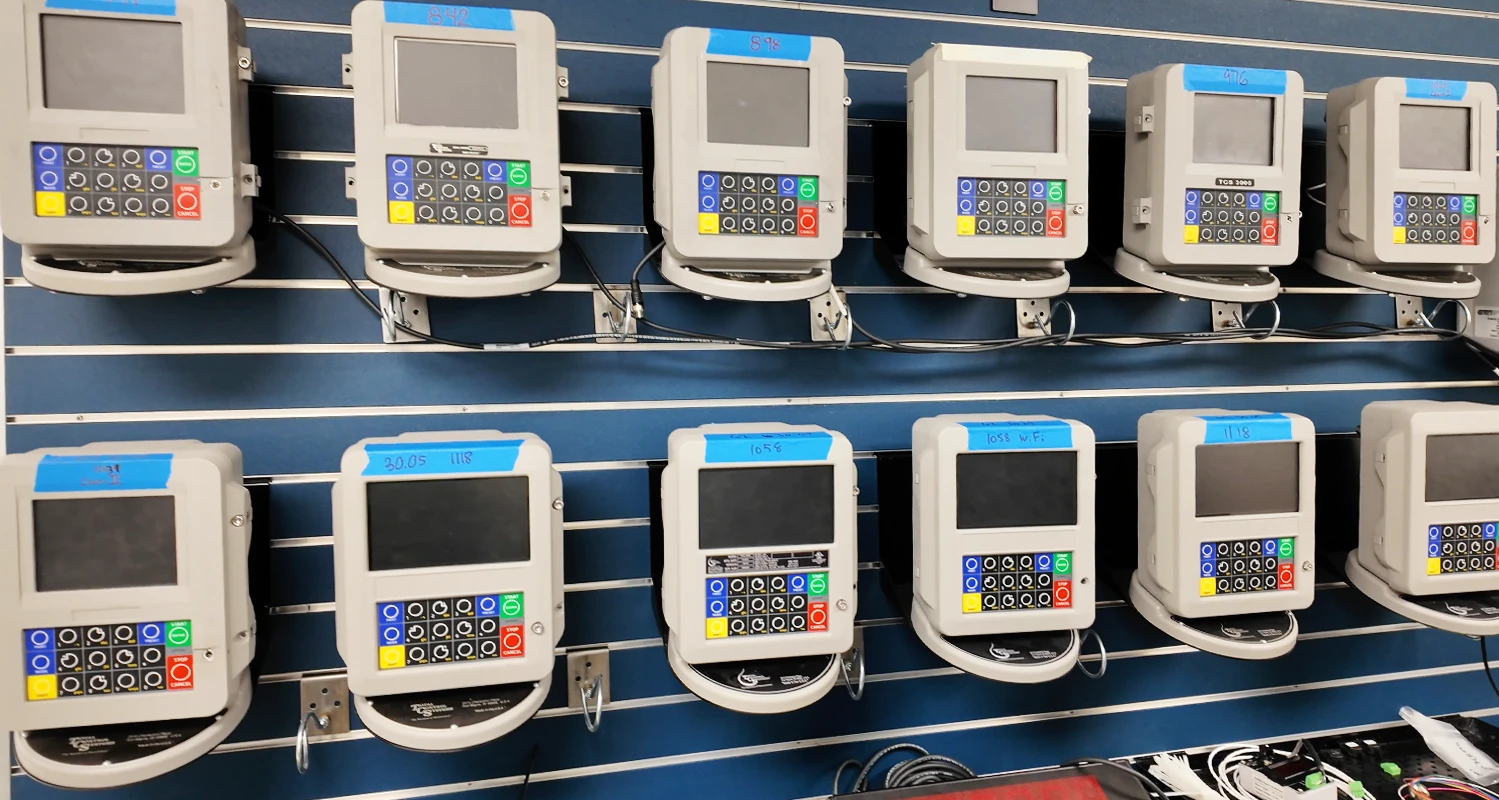
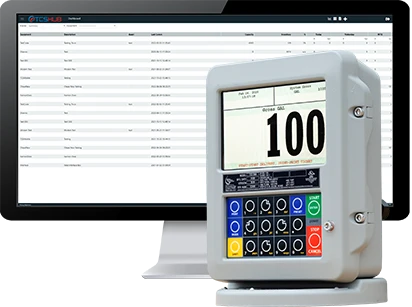
The TCS 3000 and TCS 3000EX are assembled in a climate-controlled room with electrostatic flooring designed for electronic production.
Separate areas are dedicated to the standard Class I, Division 2 register and the explosion-proof register. Digital boards are produced off-site, while final construction is completed in-house.
Before shipment, each TCS 3000 undergoes a full functionality test covering pump control, speed control, relays, digital valves, air elimination, additive injection, and other functions.
For larger orders, units can also be prewired to customer specifications, helping create a plug-and-play installation and reduce truck-build time.
Meters and accessories are steam cleaned, primed, and coated using a water-based paint specially formulated for compatibility with ethanol and various biofuels.
Two robotic paint lines improve consistency, throughput, and material efficiency, while programmed part and tracking information helps maintain coverage and traceability.
Built-to-stock production helps TCS reduce lead times and improve product availability.
Maintaining parts and components on hand allows our team to assemble and fulfill customer orders faster when demand arises.
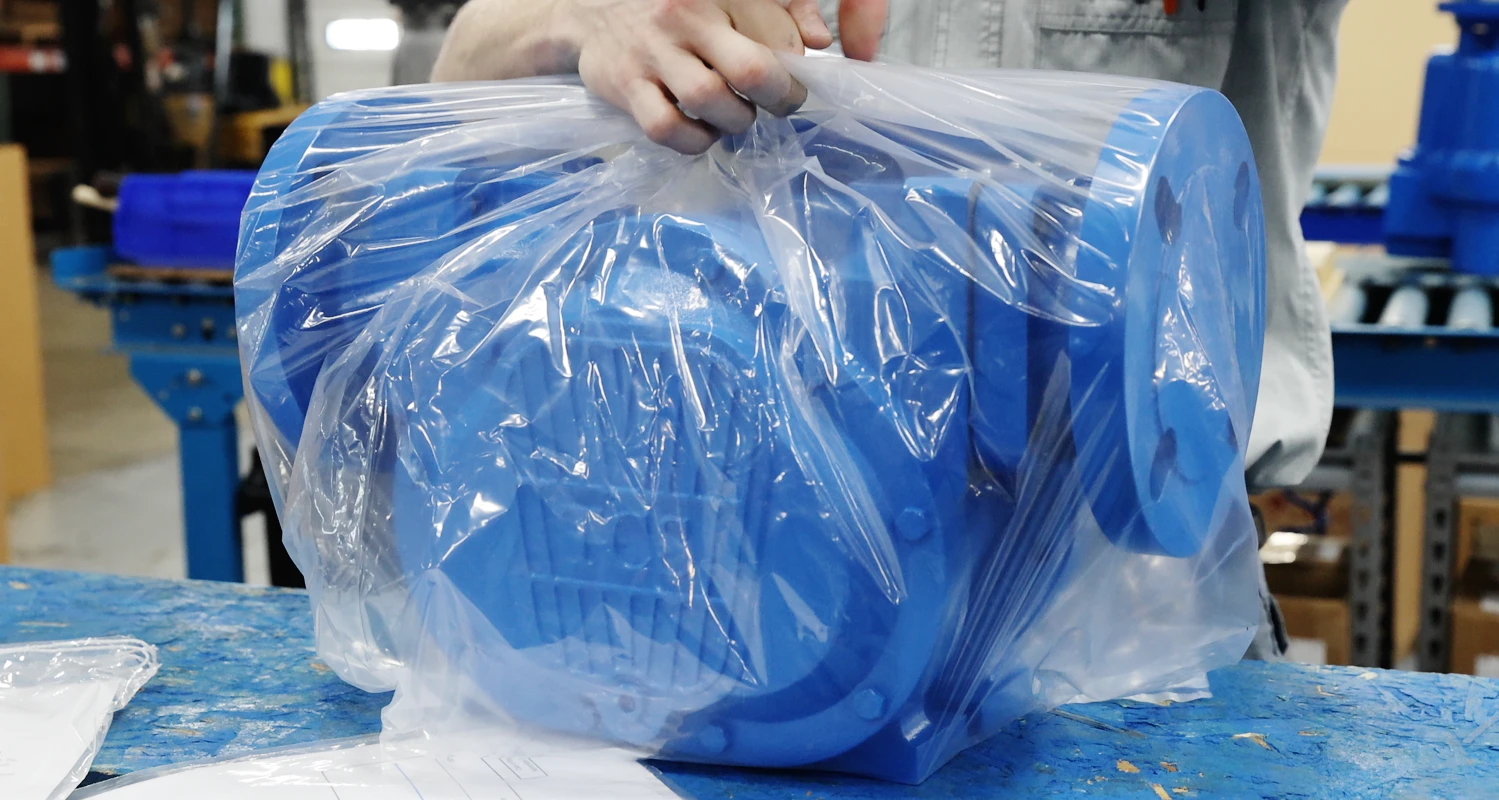
Before shipment, TCS products move through final assembly and verification to make sure each order meets the required specifications.
Products are tracked throughout the manufacturing process, helping maintain traceability and ensuring the correct equipment is prepared for shipment to the customer.
Ongoing Support & Training
OEM/Distributor Training
TCS provides online and in-person training for individuals and small groups. From TCS 3000 operation to meter calibration, troubleshooting, and repair, our training gives OEMs and distributors the knowledge they need to confidently support TCS products.
Warranties
TCS backs every product with a minimum 12-month warranty, with extended coverage available on select products. TCS 682 meters are backed by a 10-year warranty, while LP 682 meters include a 5-year warranty.
Technical Support
TCS provides factory support for the lifetime of the product. Our technical experts help troubleshoot issues with TCS meters, registers, and related products.
For TCS OnPoint systems, our crisis center provides an additional level of support by allowing our team to replicate system errors and determine whether an issue is tied to an individual component or to how the meter or register is operating within the OnPoint ecosystem.
TCS OnPoint Crisis Center
The crisis center is designed to anticipate and troubleshoot system issues in the TCS OnPoint eco system. It also doubles as a training center.

Repair Services & Exchange Program
Repair Services
Why replace when you can repair? TCS offers repair services designed to extend the life of your equipment, reduce replacement costs, and help lower your overall total cost of ownership.
TCS 682 Exchange Program
Minimize downtime and reduce upfront replacement costs with the TCS 682 Exchange Program. We’ll send you a renewed meter to get you back up and running quickly. Simply return your existing meter to TCS, where it will be evaluated, repaired, and added back into the exchange program. Once the meter is assessed, an applicable credit will be issued.

When dependable performance matters, partner with TCS.
From precision manufacturing and quality assurance to responsive support, TCS is built around delivering products you can count on.
When innovation matters, partner with TCS.
From in-house engineering and R&D to precision manufacturing and integrated technology, TCS continues to improve how products are designed, built, and supported.

When quality matters, partner with TCS.
From precision machining and rigorous testing to final assembly, quality is built into every stage of the TCS manufacturing process.